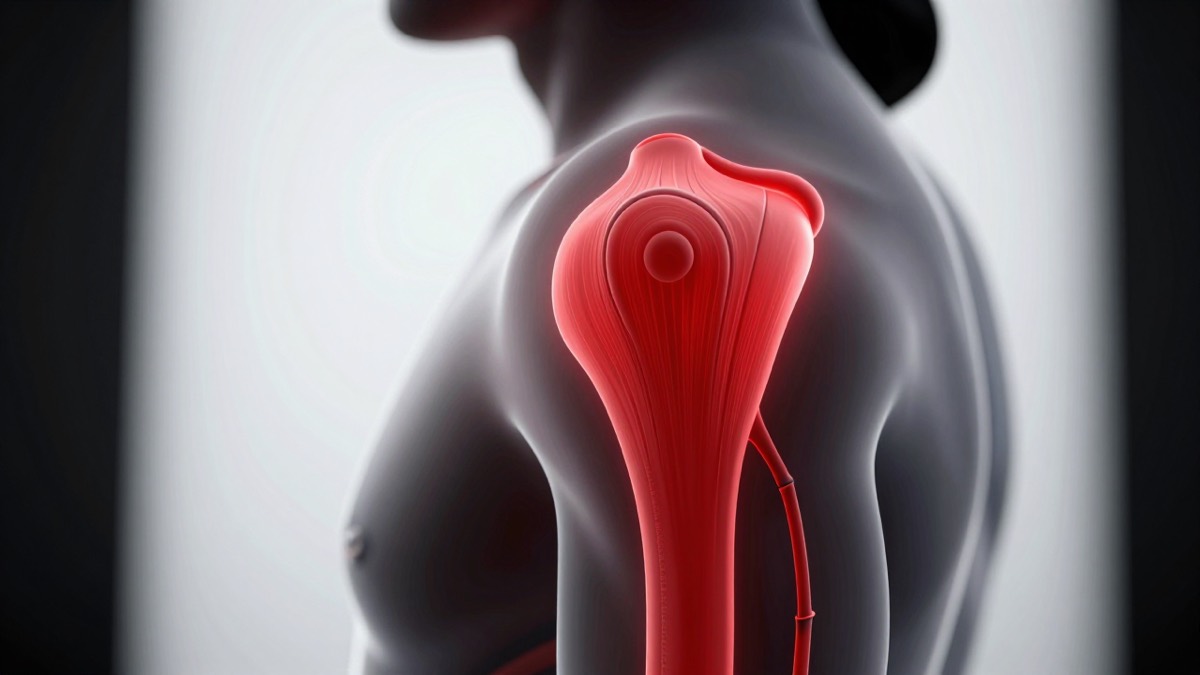
Many rotator cuff tears, especially those that develop with age, are treated without surgery. A Finnish trial (Kukkonen, 2014) found physiotherapy alone worked as well as surgery for small non-traumatic tears at 1 and 2 years. Sudden, traumatic tears in younger, active people are more often repaired. After repair, a study (Hernigou, 2014) found adding bone-marrow stem cells improved healing and reduced re-tears.
Symptoms
- Pain lifting the arm sideways or overhead
- Night pain lying on that side
- Weakness
Tendon pain for more than 3 months? Get the free guide and a doctor review of your scan.
Treatment without surgery
- Physiotherapy: strengthening the remaining cuff and shoulder blade muscles
- Activity changes
- Injections for pain
- PRP or stem cells for partial tears or degenerative tendinopathy
When surgery is advised
- Acute traumatic tear with sudden weakness, especially under about 60
- Large tears in active people
- Failed non-surgical care
Rotator cuff surgery: what it involves
Repair is usually keyhole surgery under general anaesthetic, with anchors and stitches reattaching the tendon. Expect a sling for around 4 to 6 weeks and about 6 months before heavy lifting or overhead sport. In the US, it commonly costs tens of thousands of dollars without insurance, and re-tears happen in some patients.
Tendon pain for more than 3 months? Get the free guide and a doctor review of your scan.
Treatment options
| Option | What to know |
|---|---|
| Stem cell injectionRecommended | Korean study: partial tears shrank by 83 to 90%; minimally invasive |
| Physiotherapy | As good as surgery for many small degenerative tears |
| Injections for pain | Short-term relief |
| Surgery | Large or acute traumatic tears in active people |
Partial vs full-thickness tears
Partial tears do not go all the way through the tendon and are where injections are most often used. Full-thickness tears in young, active people are more often repaired.
Common questions
Can a torn rotator cuff heal without surgery? Many people regain good function with rehab and regenerative treatment, especially with partial tears.
Does age matter? Degenerative tears are very common after 60 and often do well without surgery.