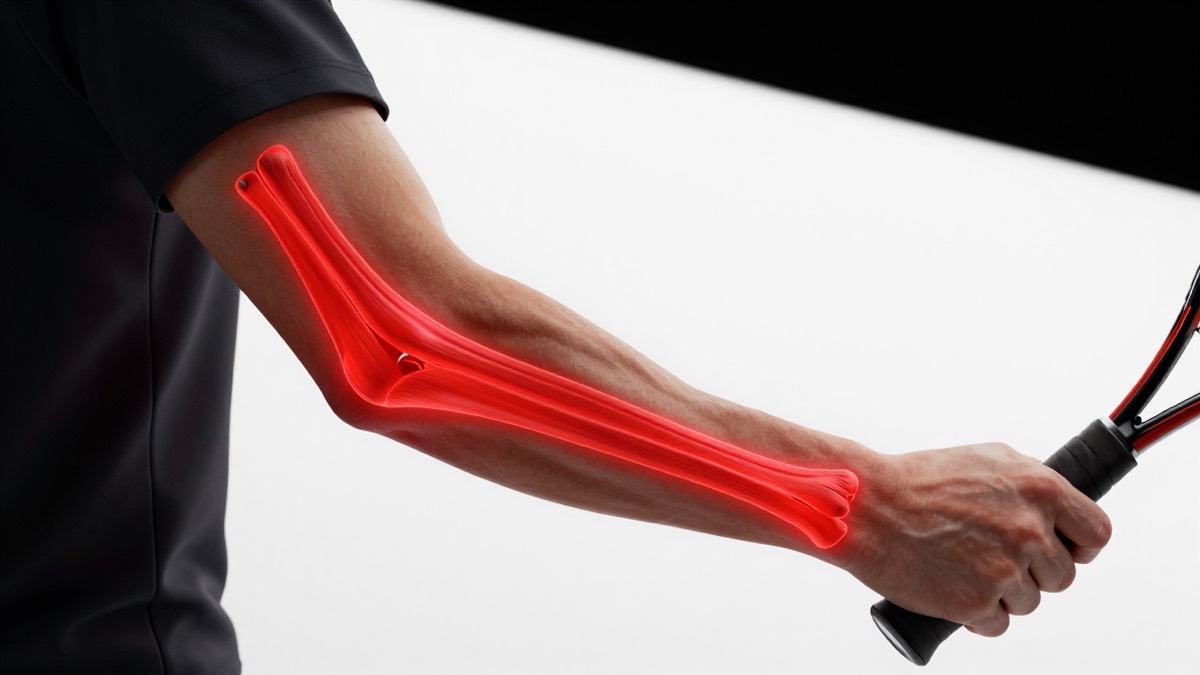
Most tendon pain, from Achilles tendonitis to tennis elbow, gets better with the right loading exercises, given enough time. Rest alone rarely fixes it, and cortisone often helps short term but can make some tendons worse later. For pain that lasts beyond 3 to 6 months of good rehab, options include shockwave therapy, PRP and, in studies, stem cells.
Stem cell treatment vs tendon surgery
| Tendon or shoulder surgery | Stem cell treatment | |
|---|---|---|
| Procedure | Incision or keyhole surgery, anchors and stitches, general anaesthetic | Ultrasound-guided injection, local anaesthetic, no incision |
| Hospital stay | Day case or overnight | Walk out the same day |
| Recovery | Sling or boot for weeks; around 6 months to full strength after cuff repair | Back to light activity within days, then guided rehab |
| Typical cost | In the US, tendon and shoulder surgery commonly costs tens of thousands of dollars without insurance | A fraction of the cost of surgery |
| Aim | Reattach or clean up the tendon | Help the tendon rebuild healthy fibres |
Our partner clinic in Bangkok has treated more than 1,000 patients with regenerative medicine. A doctor reviews your ultrasound or MRI free and recommends the treatment that is right for you. Get your free assessment.
Tendon pain for more than 3 months? Get the free guide and a doctor review of your scan.
Tendon pain relief: what works
| Option | Best for | Evidence |
|---|---|---|
| Stem cellsRecommended | Persistent tendinopathy, rotator cuff repair support | Growing clinical evidence, including randomised trials |
| Loading exercises | Almost all tendon pain | Strong, first line |
| Shockwave therapy | Plantar fasciitis, Achilles, calcific shoulder | Moderate |
| Cortisone injection | Short-term relief, frozen shoulder | Short term; can worsen some tendons later |
| PRP | Tennis elbow, plantar fasciitis, some others | Mixed, best for tennis elbow |
Find your problem
- Achilles tendonitis and plantar fasciitis
- Tennis elbow
- Frozen shoulder and rotator cuff tear
- Jumper's knee and outer hip pain
Tendonitis or tendinosis?
Long-lasting tendon pain is usually a problem of tendon structure and load (tendinopathy or tendinosis), not ongoing inflammation. That is why anti-inflammatories and rest often disappoint, and progressive loading works. See tendonitis vs tendinosis.
Tendon pain for more than 3 months? Get the free guide and a doctor review of your scan.
When surgery is needed
Complete tendon ruptures and some acute tears in younger people often need repair. See when tendon surgery is needed.
How tendons work
Tendons connect muscle to bone. They are made mostly of tightly packed collagen fibres arranged in parallel, like the strands of a rope. Good tendons do more than transmit force: the Achilles and patellar tendons act like springs, storing energy as you land and releasing it as you push off. That is why they cope with huge loads in running and jumping.
Tendons have a modest blood supply and a slow turnover of cells. They adapt to load, getting stronger when load builds gradually, but they adapt slowly: months rather than days. When load rises faster than the tendon can adapt, the structure starts to change, and pain follows.
Why tendons start to hurt
Most tendon pain is an overload problem. Common triggers:
- A sudden jump in training: more distance, more hills, more sessions, new sport
- A change in equipment or surface: new shoes, harder ground, a heavier racket
- Return after a break, when the tendon has lost capacity
- Compression: the tendon squeezed against bone, as in insertional Achilles or outer hip pain
- Age: tendons become less tolerant of sudden load changes after 40
Some factors raise risk beyond load: diabetes, high cholesterol, being overweight, and certain medicines, notably fluoroquinolone antibiotics such as ciprofloxacin, which carry official warnings about tendon damage and rupture.
The tendon pain continuum
Researchers describe tendon problems as a continuum (Cook and Purdam, 2009). A reactive tendon is irritated after a load spike: it thickens and hurts but the structure is mostly intact, and it settles quickly when load is managed. If overload continues, the tendon moves into disrepair, with disorganised collagen. Long-standing cases become degenerative, with areas of poor structure that may never fully normalise. Even then, most people can get back to full activity, because the healthy parts of the tendon can be strengthened to carry the load.
This explains why the same advice does not fit everyone. A reactive tendon needs load reduced for a short time. A degenerative tendon needs patient, progressive strengthening, and is where shockwave, PRP and stem cells are most often discussed.
Loading: the treatment that works
Exercise for tendons is not general stretching. It is a staged loading programme:
- Isometrics for painful phases: holding a muscle contraction, such as a wall sit or a calf-raise hold, for 30 to 45 seconds. Often reduces pain for a few hours.
- Isotonic strength: slow, heavy lifts through range, 3 to 4 sets, every other day, building weight week by week.
- Energy storage: faster movements that use the spring, such as skipping, hopping and bounding, for tendons that need them.
- Return to sport: sport-specific drills, then full training.
Use the pain monitoring rule: pain during exercise up to about 5 out of 10 is acceptable if it settles by the next morning. If pain is worse the next day, reduce the load, do not stop. Most programmes take 12 weeks before judging the result.
Common mistakes that keep tendons sore
- Complete rest: pain eases, but the tendon loses capacity and flares again on return
- Stopping rehab at 4 weeks because it is boring or "not working yet"
- Repeated cortisone injections: short relief, sometimes a worse tendon later
- Aggressive stretching of insertional tendons, which adds compression
- Changing five things at once, so you never learn what helped
Tendon problems by area
| Area | Common problem | Main treatment |
|---|---|---|
| Heel | Achilles tendinopathy, plantar fasciitis | Calf loading, footwear, shockwave |
| Elbow | Tennis elbow | Wrist extensor loading; PRP if persistent |
| Shoulder | Rotator cuff, frozen shoulder | Physiotherapy; injections for pain |
| Knee | Jumper's knee | Isometrics, heavy slow resistance |
| Hip | Gluteal tendinopathy | Education, hip strength, avoid compression |
Where PRP and stem cells fit
When a tendon has not responded to 3 to 6 months of good rehab, the problem is usually poor-quality tendon tissue that is not remodelling well. PRP delivers a concentrated dose of your own platelets and growth factors into the tendon; its best evidence is in tennis elbow, where trials found better one-year results than cortisone. Stem cells aim to support remodelling of damaged collagen. Korean trials found injected stem cells shrank partial rotator cuff tears and tennis elbow defects, and a French study found stem cells added during rotator cuff repair reduced re-tears. These treatments work alongside rehab, not instead of it.
For athletes and active people
Return to sport is a progression, not a date. Before full training, you should be able to do your strength exercises at full load without next-day pain, hop or jump repeatedly on the affected side if your sport needs it, and complete sport-specific drills comfortably. Many athletes keep one or two tendon exercises in their weekly routine for good, which is the best protection against the next flare.
Ultrasound or MRI?
Most tendon problems can be diagnosed from the story and an examination. Ultrasound is quick, cheap and shows tendon thickening, tears and blood vessel growth, and it can guide injections. MRI gives a fuller picture of shoulders, hips and complex cases. Either report is enough for a free scan review.
Shockwave, cortisone and other options explained
Shockwave therapy sends pressure waves into the tendon over 3 to 5 weekly sessions. It is uncomfortable but quick, and has the best support in plantar fasciitis, calcific shoulder tendinopathy and some Achilles cases, used alongside loading. Cortisone calms pain fast, which is why it is popular, but in tennis elbow a major review in The Lancet found people who had cortisone were doing worse at 6 to 12 months than those who did not. It is avoided around the Achilles because of rupture risk, and most useful in the painful early phase of frozen shoulder. Hyaluronic acid, laser, ultrasound therapy and dry needling all have supporters but weaker or mixed evidence. Surgery is reserved for ruptures, some acute tears and the small group whose pain persists after a year of full rehab.
How long does recovery take?
- Reactive, recent tendon pain: often settles within 2 to 6 weeks once load is managed.
- Established tendinopathy: usually 3 to 6 months of consistent loading for a big improvement.
- Long-standing or degenerative cases: 6 to 12 months, sometimes with shockwave, PRP or stem cells added.
- Frozen shoulder: often 1 to 3 years in total, with the painful phase first.
- After rotator cuff repair: around 6 months to return to heavy overhead work or sport.
Progress is rarely a straight line. Expect good weeks and flare weeks, and judge the trend over a month rather than a day.
Travelling for treatment
Regenerative tendon treatments such as PRP and stem cell injections are not available, not covered, or have long waits in many countries. Bangkok is one of Asia's main medical-travel hubs, and a treatment trip usually takes 5 to 7 days, including the procedure, rest and a rehab plan to follow at home. Before anything is booked, a doctor reviews your ultrasound or MRI and tells you honestly whether treatment could fit, or whether more rehab or surgery at home makes more sense. Read the guide for your country: Australia, UK, USA, Canada, New Zealand, Singapore, UAE and Hong Kong.